The automotive industry is undergoing a profound transformation, driven by Artificial Intelligence (AI). From autonomous vehicles to intelligent manufacturing, AI is reshaping every aspect of how cars are designed, produced, and experienced by consumers. With AI, vehicles are becoming smarter, safer, and more efficient, while manufacturers optimize processes and reduce costs. In this article, we explore the various ways AI is revolutionizing the automotive industry in 2026 and beyond.
1. AI-Powered Autonomous Vehicles
Self-driving cars are no longer a futuristic concept—they are becoming a reality. AI enables vehicles to process real-time data from cameras, sensors, and LIDAR systems to navigate roads safely. By combining machine learning, computer vision, and sensor fusion, autonomous vehicles can interpret traffic conditions, recognize obstacles, and make split-second decisions.
Key Advantages:
- Reduced Human Error: Over 90% of car accidents are caused by human mistakes; AI can drastically reduce this number.
-
Enhanced Traffic Efficiency: Autonomous cars can communicate with each other and traffic systems to optimize flow.
-
Convenience for Drivers: Commuters can focus on work or leisure while the car drives itself.
Examples in Practice:
-
Tesla Full Self-Driving (FSD): Uses AI to enable lane-keeping, autopilot navigation, and advanced object detection.
-
Waymo One: Offers autonomous taxi services in select cities, utilizing AI to handle complex urban traffic.
2. Predictive Maintenance for Longevity and Safety
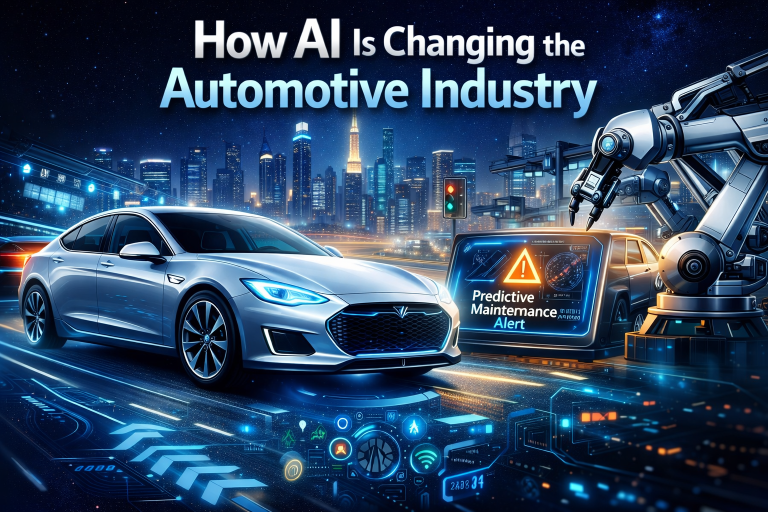
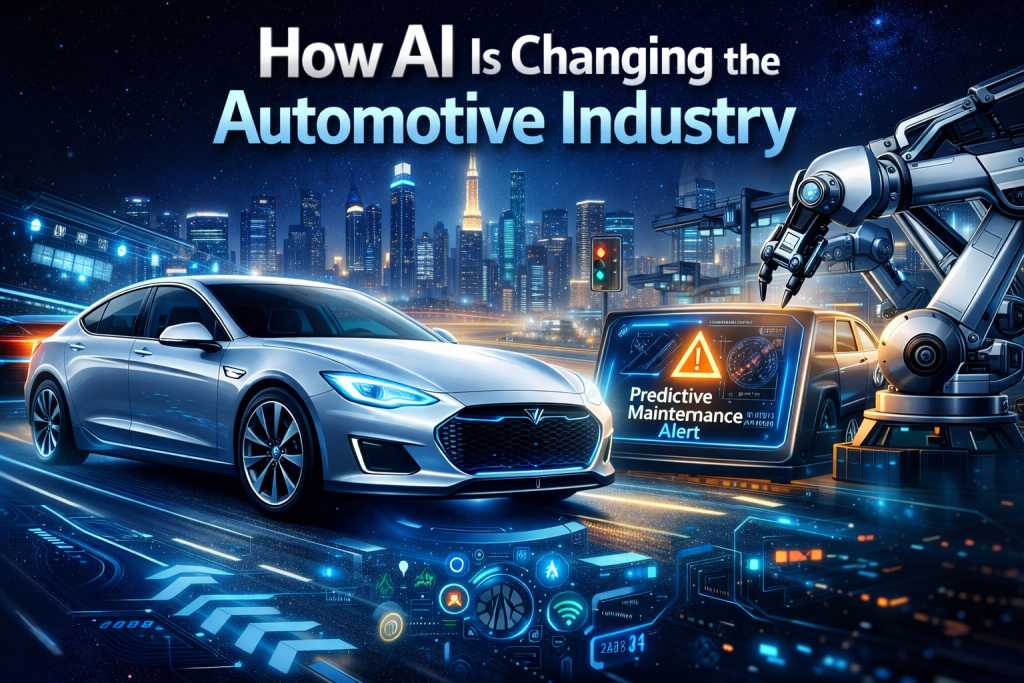
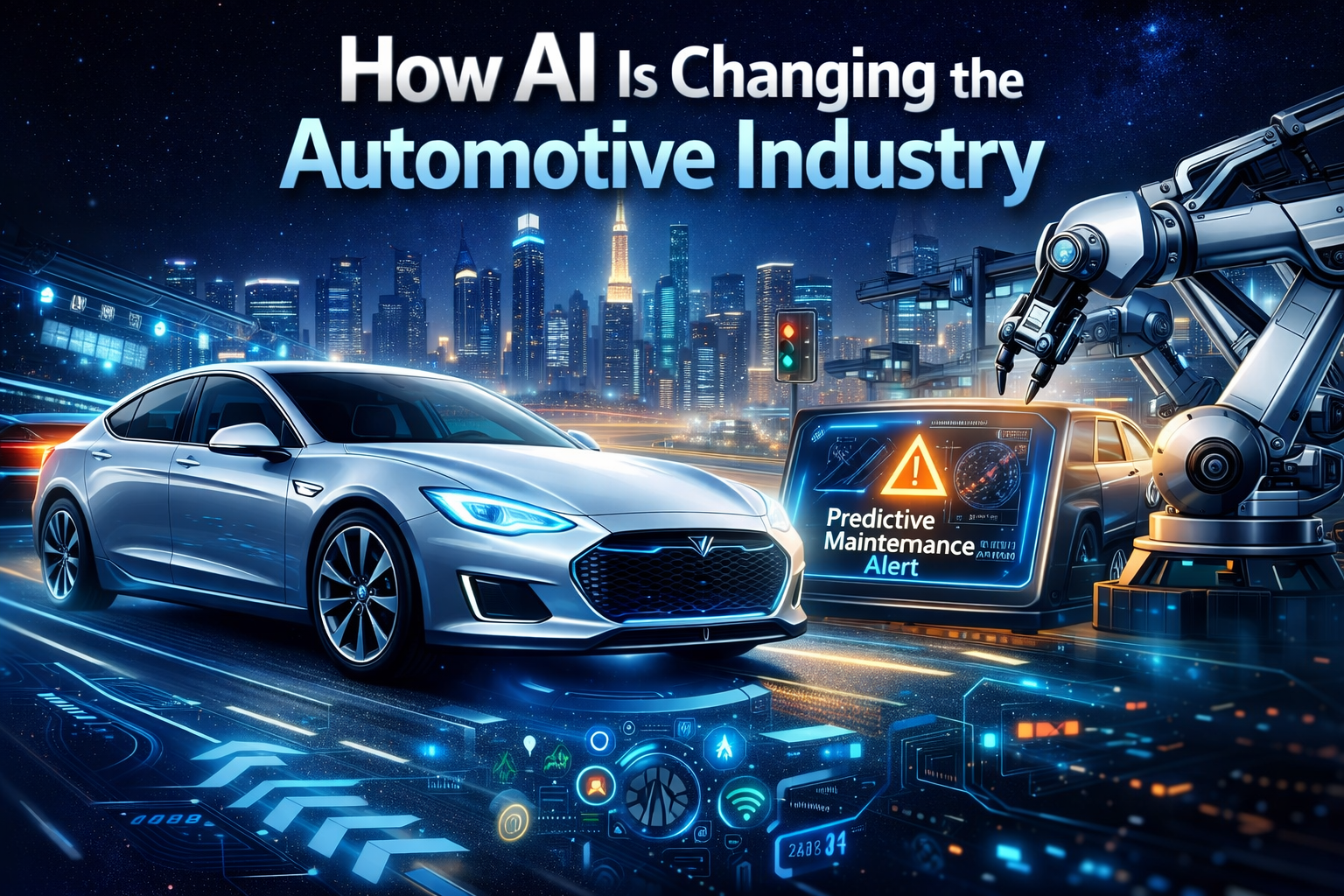
AI is revolutionizing vehicle maintenance by predicting issues before they become serious. Using IoT sensors, cars collect data on engine performance, tire conditions, brake wear, and more. AI algorithms then analyze this data to predict potential failures, allowing for timely maintenance.
Benefits: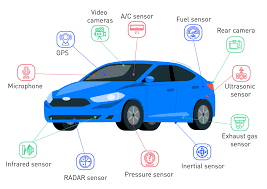
-
Minimizes vehicle downtime
-
Reduces repair costs
-
Improves safety by addressing issues before they cause accidents
Industry Application:
-
BMW and Audi use AI to monitor vehicle health in real time, alerting drivers to maintenance needs before problems escalate.
3. Smarter Manufacturing with AI
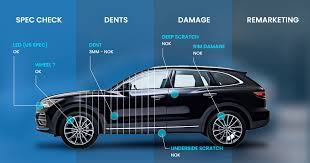
Manufacturing cars is a complex process involving thousands of parts. AI is optimizing production lines by predicting equipment failures, automating quality checks, and managing inventory. Robotics combined with AI ensures higher precision, efficiency, and safety in manufacturing plants.
Key Benefits:
-
Faster Production: AI identifies bottlenecks in real time and adjusts workflows.
-
Reduced Waste: Predictive algorithms minimize overproduction and material waste.
-
Enhanced Quality: AI-powered vision systems detect defects that human eyes may miss.
Real-World Example:
-
Toyota uses AI to optimize its assembly lines, improving both speed and product quality.
4. Enhanced In-Car Experience
AI isn’t just transforming vehicles—it’s also improving the driver and passenger experience. Modern cars integrate AI-driven infotainment systems, voice assistants, and personalized settings. AI adapts to driver habits, suggesting routes, adjusting climate control, and even recommending music playlists.
Key Features:
-
Voice-activated controls for safer driving
-
AI-powered navigation that considers traffic, weather, and personal preferences
-
Personalized in-car experiences for different drivers
Example:
-
Mercedes-Benz MBUX system learns driver behavior and offers tailored recommendations, improving comfort and safety.
5. AI in Traffic Management and Smart Cities
AI’s influence extends beyond individual vehicles. Traffic management systems powered by AI can optimize traffic lights, reduce congestion, and improve urban mobility. By analyzing traffic patterns, AI helps cities plan better infrastructure and lower emissions.
Benefits:
-
Shorter commute times and reduced congestion
-
Lower environmental impact through reduced idling and emissions
-
Safer roads with predictive traffic control
Example:
-
Siemens and IBM collaborate on AI-driven smart city traffic solutions that improve flow and reduce accidents.
6. AI for Vehicle Safety
Safety is one of AI’s most transformative impacts in the automotive industry. Advanced Driver Assistance Systems (ADAS) use AI to prevent collisions and protect passengers. Features include:
-
Automatic Emergency Braking (AEB)
-
Lane Departure Warning and Lane Keeping Assist
-
Adaptive Cruise Control
AI continuously learns from driving patterns and improves system accuracy over time, making vehicles safer with every mile driven.
7. AI in Electric Vehicles (EVs)
Electric vehicles are growing rapidly, and AI plays a crucial role in managing battery efficiency, route optimization, and energy consumption. AI helps EVs:
-
Optimize battery usage based on driving conditions
-
Plan charging stops efficiently
-
Enhance regenerative braking for longer range
Example:
-
Tesla AI predicts energy consumption and adjusts driving performance to maximize range.
8. AI-Driven Autonomous Fleet Management
AI is also transforming logistics and ride-sharing industries. Companies can use AI to manage fleets, optimize routes, and reduce operational costs. Autonomous trucks and delivery vehicles promise faster, safer, and more efficient logistics.
Benefits:
-
Lower fuel and operational costs
-
Reduced delivery times
-
Safer and more reliable transportation of goods
Example:
-
Amazon and TuSimple are experimenting with AI-powered autonomous delivery and freight vehicles.
9. Challenges and Considerations
While AI offers incredible benefits, there are challenges:
-
Regulatory Hurdles: Laws for autonomous vehicles vary across countries.
-
Ethical Decisions: AI must make complex moral decisions in critical situations.
-
Cybersecurity Risks: Connected AI vehicles are vulnerable to hacking.
-
High Costs: Developing and deploying AI systems is expensive.
Despite these challenges, the industry is making steady progress, and AI adoption is accelerating.
Conclusion
AI is not just an add-on feature—it is redefining the automotive industry. From autonomous driving and predictive maintenance to smart manufacturing, enhanced passenger experiences, and city-wide traffic management, AI is making vehicles safer, smarter, and more sustainable.
Automakers embracing AI today are not just improving efficiency—they are shaping the future of mobility. The cars we drive in 2026 and beyond will be more intelligent, more connected, and more capable than ever before.