Jasper AI is an AI writing assistant that speeds long-form content production by generating structured drafts, outlines, and SEO-aware copy from concise inputs. This Jasper AI writing tutorial explains how to convert research and keywords into 1,500–3,000+ word authority posts through repeatable workflows, prompt patterns, and human+AI editing checkpoints. Many content teams struggle to scale long-form content while preserving E-E-A-T, brand voice, and semantic relevance; this guide shows how to use Jasper AI tools and integrations to solve those problems without sacrificing quality. You will get a step-by-step workflow, setup checklist, advanced SEO tactics (entity SEO, structured data, HowTo/FAQ schema), and operational recipes for scaling and repurposing long-form assets. Throughout, the article uses “Jasper AI tutorial,” “how to use Jasper AI for long-form,” and related target keywords to model natural integration and semantic phrasing for SEO practitioners. Read on for setup, prompt templates, EAV tables mapping features to outcomes, and practical lists you can apply immediately.
What Is Jasper AI and Why Use It for Long-Form SEO Blogs?
Jasper AI is an AI writing assistant that uses NLP and machine learning to generate long-form content by expanding outlines, following templates, and applying commands that preserve context across a draft. This mechanism reduces drafting time while producing copy that can be tuned for on-page SEO and consistent brand voice, delivering faster content output and more predictable first drafts. The primary benefits for long-form SEO blogs are speed and efficiency, integrated SEO optimizations, and customizable brand voice to keep multi-article series consistent. Understanding these core advantages frames why teams adopt Jasper AI for content marketing workflows and content pipelines that emphasize topical authority.
Jasper AI supports long-form content with features designed to maintain context and scale production while integrating with SEO tools. Briefly, the platform offers Boss Mode and a Long-Form Assistant to manage extended context windows and commands, templates and custom commands for outlines and paragraph expansion, Surfer SEO integration for on-page optimization targets, and brand voice settings to keep tone consistent across posts. These capabilities make Jasper AI a practical choice in an AI-driven content stack when combined with human editorial controls. Next we’ll examine how Jasper AI accelerates drafting and which SEO-focused features directly impact blog visibility.
How Does Jasper AI Accelerate Long-Form Content Creation?
Jasper AI accelerates long-form drafting by converting a structured outline into expanded sections using templates and command-driven prompts that preserve prior context. The mechanism works by feeding an outline, brief, and semantic keyword list to the long-form assistant or Boss Mode, then instructing the model to generate section drafts, transitions, and summaries that can be iterated. The specific benefit is measurable time savings during the first draft phase: writers can produce a cohesive multi-thousand-word draft faster than composing each paragraph from scratch. These time gains free human editors to focus on facts, unique insights, and E-E-A-T improvements rather than initial composition tasks.
Because the model can maintain extended context when configured correctly, teams can chain commands to expand headings into paragraphs, generate meta descriptions, and produce alt-text or CTAs in one session. This chaining reduces cognitive switching and helps preserve semantic relationships across the piece. The next section outlines the SEO features Jasper provides to ensure drafts are aligned with on-page optimization requirements.
What SEO Features Does Jasper AI Offer for Blog Optimization?
Jasper AI includes SEO-focused workflows and integrations that help align generated content to keyword targets and structural best practices for search visibility. Mechanisms include Surfer SEO integration to import on-page targets and semantic keywords, templates that enforce heading hierarchies and internal-link prompts, and keyword insertion guidance to keep density and semantic coverage balanced. The specific benefit is a draft that already approximates on-page requirements, reducing the optimization passes editors must run before publishing.
Using these features with entity-aware prompts and topic clusters lets Jasper produce drafts that are semantically coherent and easier to map to structured data requirements like HowTo or FAQ schema. When paired with a human-led editorial pass focused on citations and unique examples, the SEO features reduce rework and align content with modern semantic search expectations. This prepares us to walk through concrete setup steps for teams adopting Jasper AI.
How Do You Set Up Jasper AI for Writing SEO-Optimized Long-Form Blogs?

Setting up Jasper AI for long-form SEO begins with configuring the workspace: enable long-form features, define brand voice, and connect SEO integrations so that generated content aligns with on-page goals. The mechanism is to prepare inputs—content briefs, target keywords, and semantic entity lists—then configure Jasper’s templates and settings to use those inputs consistently across drafts. The benefit is a repeatable environment where each article starts from a consistent brief and outputs a draft that needs fewer optimization passes. Below are practical setup steps to start producing SEO-optimized long-form content.
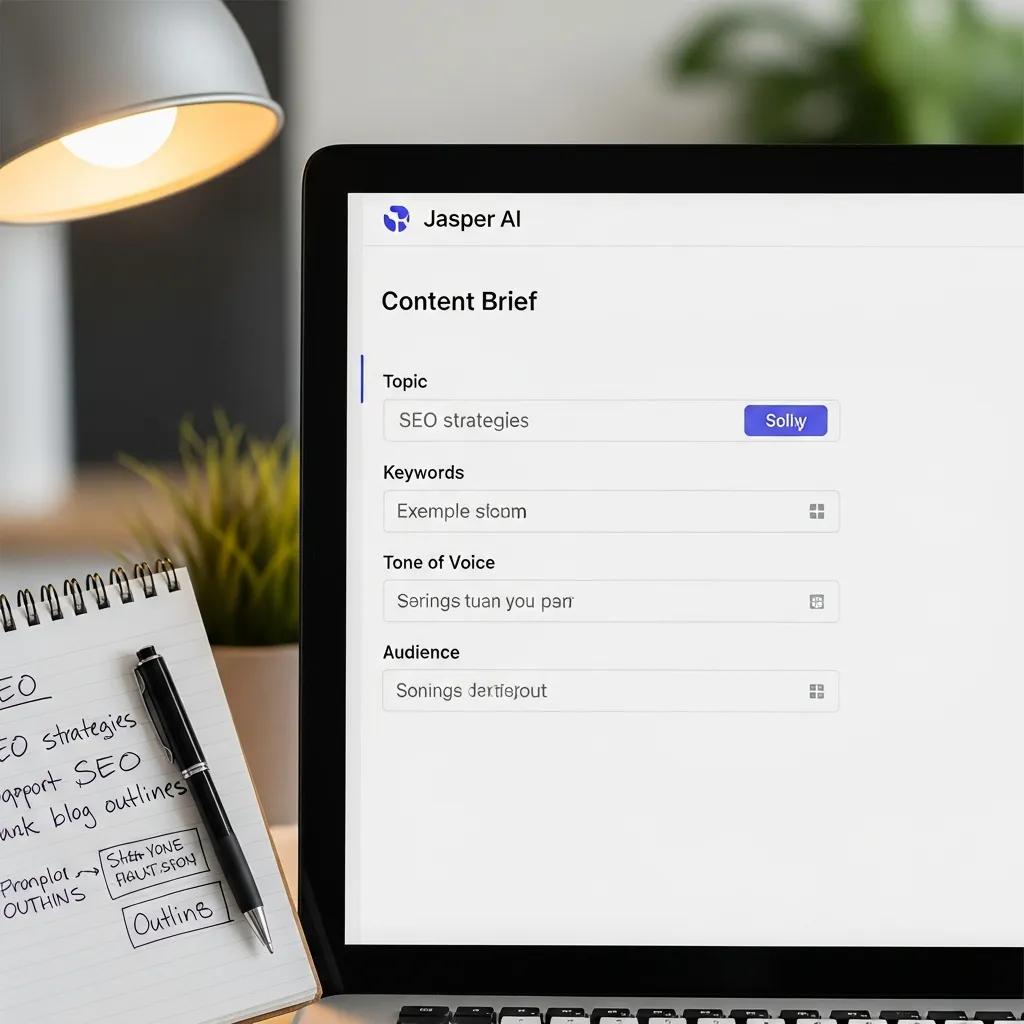
- Create a content brief that lists primary keyword, search intent, target audience, main entities, and desired article length.
- Enable Boss Mode and the Long-Form Assistant to allow command chaining and larger context windows for multi-section drafts.
- Configure brand voice and templates so every draft follows the same tone and structure for series content.
- Connect Surfer SEO or similar tools to import on-page targets and semantic keyword suggestions into the draft session.
These steps create a baseline environment that supports scale and semantic optimization. The next subsections explain Boss Mode and templates in more detail and include an EAV table comparing key Jasper features for long-form work.
What Is Jasper AI Boss Mode and How Does It Unlock Long-Form Potential?
Boss Mode is a feature that gives the writer command-level control, allowing instructive prompts and longer context retention so Jasper can produce consistent multi-section drafts. The mechanism is command chaining: you instruct the model to perform tasks (outline, expand, rewrite) while preserving earlier content, which increases coherence across sections. The benefit is the ability to produce longer, topic-consistent drafts in a single session rather than many disconnected prompts. Boss Mode is especially valuable for topic clusters and pillar pages where cross-section consistency and internal linking cues are required.
To use Boss Mode effectively, start with a robust content brief, use short commands to expand headings, and request explicit semantic elements like entities or citations to anchor claims. Best practices include saving frequently used commands in templates and keeping prompts precise to avoid hallucinations. Understanding Boss Mode’s role leads directly into how templates and commands map to outline creation.
How to Use Jasper AI Templates and Commands for Blog Outlines?
Templates and commands turn an initial brief into a structured outline and then expand that outline into full sections with consistent voice and format. The mechanism is template-driven scaffolding: choose an outline template, inject keywords and entities, then run expansion commands per heading to produce paragraphs, subheadings, and transition sentences. The benefit is faster production of a logically structured draft that follows the chosen content architecture and is easier for editors to refine.
Practical tips include creating template variations for how-to posts, listicles, and pillar pages, and storing common command sequences for paragraph expansion, intro/outro generation, and meta description drafts. Using templates reduces prompt engineering time and helps teams produce repeatable outputs that align to content pipelines and SOPs. The following table compares key Jasper features for long-form use to help decide which to enable first.
What Is the Step-by-Step Workflow to Write Long-Form SEO Blogs with Jasper AI?
An effective workflow starts with research and ends with human editing and measurement, and Jasper AI accelerates the middle drafting and optimization steps by automating expansion and initial SEO passes. The mechanism is a linear pipeline: Topic Research → Outline → Draft → Optimize → Edit → Publish, where Jasper handles outline-to-draft transformations and integrates SEO signals via Surfer. The benefit is a repeatable sequence that reduces time-to-publish while preserving opportunities for human-led E-E-A-T enhancements. Below is a concise numbered workflow to use as a checklist in your content pipeline.
- Conduct topic and keyword research and map intent to content types.
- Build a content brief with primary and semantic keywords and key entities.
- Generate an outline and expand each heading using Jasper templates/commands.
- Run on-page optimization with Surfer SEO targets and adjust headings/keywords.
- Human-edit for facts, citations, voice, and unique insights, then publish.
This workflow gives teams a predictable path to create SEO-ready long-form content with Jasper AI. The next subsections show how to research inputs, use prompt sequences for drafting, optimize for semantic search, and why human editing is essential. A mapping table follows showing workflow components, the Jasper tools/commands to use, and the expected outcome for each stage.
How to Conduct Topic and Keyword Research for Jasper AI Blogs?
Topic research identifies target questions and semantic entities that should appear in the brief to guide Jasper’s output toward the right search intent. The mechanism is to use keyword tools (Surfer, Ahrefs, SEMrush) to collect primary keywords, related terms, and common questions, then convert those into an evidence-backed brief. The benefit is a higher-quality initial prompt that steers Jasper toward relevant content and reduces time editing for topical relevance.
Practical steps include extracting search intent, building a semantic keyword list (entities and synonyms), and compiling top-ranking article outlines to map structure. Feed these items into the content brief and prioritize entities to ensure Jasper includes the semantic signals search engines expect. With research locked, drafting becomes a series of precise prompt-driven expansions.
How to Draft and Expand Blog Sections Using Jasper AI Commands?
Drafting with Jasper is a systematic sequence of prompts: provide the heading, paste the brief, and ask the assistant to expand into a 3–5 paragraph section with key entity mentions and internal-link suggestions. The mechanism is incremental expansion—generate an intro, then request evidence, examples, and transitions—so coherence is maintained throughout the article. The benefit is that complex sections (case studies, process steps, deep analysis) can be drafted rapidly while keeping the editorial team focused on uniqueness and sourcing.
Use prompt templates such as “Expand heading X into a 240-word section including [entity list], one example, and two internal link suggestions.” Save these commands as templates for reuse to accelerate the draft-to-edit handoff. The next subheading describes on-page and semantic optimization strategies to apply after the draft is generated.
How to Optimize Jasper AI Content for SEO and Semantic Search?
Optimizing Jasper drafts for SEO involves checking title tags, meta descriptions, headings, entity coverage, keyword distribution, and schema recommendations to align with both user intent and machine understanding. The mechanism is to run the draft against Surfer SEO targets, adjust headings and density, map entities to authoritative sources, and add HowTo or FAQ schema where appropriate. The benefit is improved discoverability in SERPs and higher relevance for AI-based retrieval systems by explicitly signaling semantic relationships.
A practical optimization checklist includes: fine-tune H1/H2 hierarchy, ensure primary entity mentions appear naturally, add schema markup suggestions (HowTo, FAQ, Article), and build internal links to topical cluster pages. After optimization, the final step is human editing to confirm accuracy and inject unique research or opinions.
Why Is Human Editing Essential for AI-Generated Long-Form Content?
Human editing verifies facts, enforces brand voice consistency, and injects original insights that elevate AI drafts from competent to authoritative, which directly supports E-E-A-T and reduces hallucination risk. The mechanism is an editorial pass that focuses on citations, unique examples, readability improvements, and SEO finalization. The benefit is measurable: content that passes quality audits, ranks better due to credibility signals, and builds trust with readers.
Editors should use a checklist covering fact-checking, source attribution, adding proprietary data or quotes, and adjusting tone to match brand voice. This human layer is critical before publishing and completes the Jasper-driven workflow outlined above.
How Can You Apply Advanced SEO Strategies with Jasper AI for Better Rankings?
Advanced SEO with Jasper AI pairs entity-based optimization, E-E-A-T reinforcement, and structured data to improve relevance and SERP feature eligibility. The mechanism is to map topic entities, authoritative sources, and schema types into the content brief so Jasper includes semantic cues that search engines and AI systems use to evaluate topical authority. The benefit is better alignment with modern ranking signals that prioritize expertise, structured answers, and clear entity relationships.
How to Optimize Jasper AI Content for E-E-A-T and Entity-Based SEO?
To boost E-E-A-T, instruct Jasper to include author attribution, linkable reference suggestions, and prompts to cite primary sources or studies for claims, then have editors verify and add precise citations. The mechanism is to bake E-E-A-T cues into the brief—define the author role, request evidence-based language, and require entity mentions tied to authoritative sources. The benefit is content that reads as expert-verified and is more likely to satisfy quality raters and semantic algorithms.
Tactical steps include adding a contributor bio block, asking Jasper to suggest citation types (study, official guidance, whitepaper), and ensuring the editor replaces suggested placeholders with real sources. Entity linking should map people, products, or organizations to well-known terms so search systems can place the content in the right knowledge graph context. These practices directly raise content trustworthiness.
What Role Does Structured Data Play in Enhancing Jasper AI Blogs?
Structured data (Article, HowTo, FAQ schema) clarifies content intent to search engines and can surface rich results like step-by-step guides or answers in SERPs, increasing visibility and CTR. The mechanism is to include schema-focused output from Jasper—ask the assistant to produce JSON-LD snippets conceptually or to list FAQ pairs—so editors can implement structured data easily. The benefit is improved SERP real estate and clearer signals to AI systems about the content’s purpose.
Apply HowTo schema for process-oriented guides and FAQ schema for question-based sections that map to People Also Ask. Jasper can generate concise question-answer pairs that editors convert into schema markup. Combining entity mapping with schema signals strengthens the page’s eligibility for rich features and helps automate part of the structured-data drafting process.
How Do You Scale and Repurpose Long-Form Content Using Jasper AI?
Scaling with Jasper AI relies on templates, SOPs, and automation touchpoints that convert single long-form assets into multiple derivative pieces while preserving quality through editorial checkpoints. The mechanism is to establish pipeline stages (research → brief → draft → edit → publish → measure) with clear owners and to use templates for each derivative format. The benefit is consistent, high-quality content at scale that feeds email, social, and video channels without recreating the core research.
To scale effectively, define content types, create template libraries for common outputs (blog post, newsletter, video script), and automate repetitive tasks like meta descriptions and social captions. The following subsections outline pipeline best practices and repurposing recipes with example prompts for channel-specific outputs.
What Are Best Practices for Building Content Pipelines with Jasper AI?
Best practices center on role definition, template standardization, and built-in quality gates so scaled production maintains E-E-A-T and brand voice. The mechanism is to assign owners for research, drafting, editing, and publishing, then use SOPs that include Jasper templates and editorial checklists. The benefit is predictable throughput and reduced error rates as teams expand production.
Practical pipeline elements include a content brief template, a saved set of Jasper commands for drafts, scheduled editorial reviews focused on citations and uniqueness, and measurement points for SEO performance. Automation points—such as automatic draft generation from briefs—reduce manual work, but every asset must pass a human quality gate before publication to preserve credibility and search performance.
How to Repurpose Jasper AI Long-Form Blogs Across Multiple Channels?
Repurposing turns a single pillar article into social posts, newsletters, infographics, and video scripts by asking Jasper to generate channel-specific outputs from the original content brief and selected sections. The mechanism is to identify top-performing sections, create short-form prompts (e.g., “Create five social post captions from this H2”), and produce content variants optimized for each platform’s tone. The benefit is maximizing content ROI and maintaining consistent messaging across channels with minimal extra research.
Example prompts include requesting a 130-character headline for Twitter-style posts, a 50–80 word newsletter intro summarizing the article, or a 90–120 second video script based on a subsection. Measure repurposing impact by tracking engagement KPIs per channel and feeding those learnings back into future briefs to refine what content formats resonate most.
What Are Common Mistakes and Best Practices When Writing SEO Blogs with Jasper AI?
Common mistakes include over-reliance on AI for facts, poor prompt design, weak brand-voice inputs, and skipping human verification—each of which can degrade quality and E-E-A-T. The mechanism behind these problems is treating Jasper as a source rather than a drafting tool; the benefit of avoiding these mistakes is higher editorial quality and fewer post-publish corrections. Below are dos and don’ts and actionable best practices to keep AI-assisted content reliable and unique.
- Do craft precise briefs that include target keywords, entities, and desired tone.
- Do perform a dedicated fact-check and cite authoritative sources during editing.
- Do use templates and SOPs to maintain consistency across articles.
- Don’t publish drafts without human review or rely on AI for primary research claims.
The next subsections provide prompt templates for brand voice and a checklist to avoid typical AI content pitfalls.
How to Craft Effective Prompts and Maintain Brand Voice Consistency?
Effective prompts are specific: they include the audience, desired tone, key entities, and explicit structure (e.g., “Write a 250-word section aimed at mid-level marketers using an authoritative, accessible tone and include two examples”). The mechanism is to standardize a brand-voice snippet that is added to every brief so Jasper outputs consistent phrasing and style. The benefit is fewer tone edits and faster approvals.
Create a short brand-voice template that specifies formality, preferred vocabulary, and examples of on-brand vs. off-brand phrasing, then include that in all Jasper sessions. Test and iterate prompts by comparing outputs and refining the voice snippet until consistency improves across multiple drafts.
What Are Typical AI Content Pitfalls and How to Avoid Them?
Typical pitfalls include factual hallucinations, generic or derivative language, and keyword-stuffed content that reads unnaturally. The mechanism of mitigation is a layered editorial approach: evidence validation, uniqueness checks, and readability optimization. The benefit is content that meets quality standards and avoids ranking penalties or reader distrust.
A brief mitigation checklist: validate every factual claim, replace placeholder citations with real sources, run a uniqueness check to avoid thin content, and follow a readability pass to ensure clarity. When editors follow these steps, AI-generated drafts become high-quality assets rather than risky shortcuts.
- Editorial Checklist: Validate claims, insert citations, and add unique examples.
- Prompt Iteration: Refine prompts if outputs are generic or off-tone.
- Performance Monitoring: Track KPIs and iterate briefs based on what ranks.
These lists and tables give operational clarity to teams using Jasper AI within a modern SEO program. Use the workflows and EAV mappings above to translate strategic goals into repeatable production steps that preserve E-E-A-T and semantic relevance.